

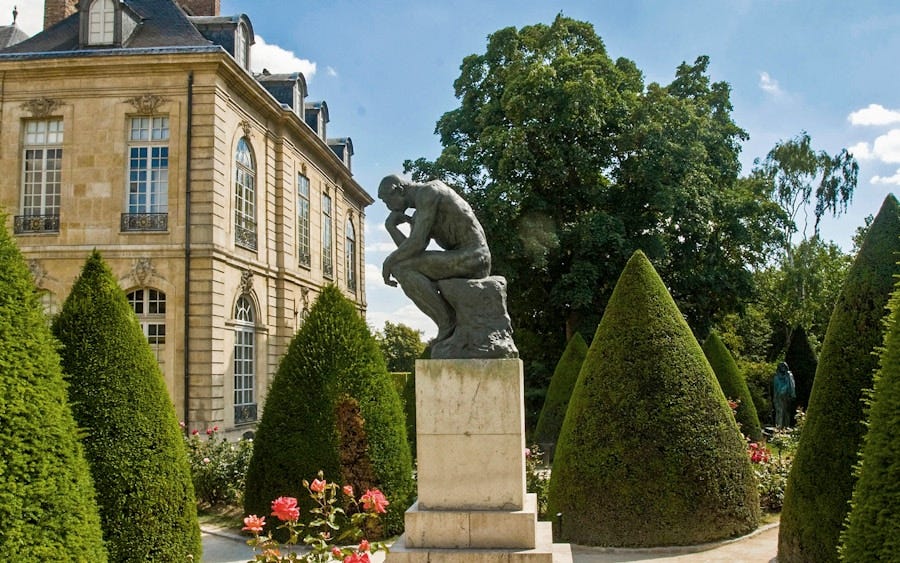
Greek philosopher Plato wrote that the soul had three parts, the rational, the spirited, and the appetitive. In his Republic, he also wrote that men should share their wives, that all sex should be had in public, and that children should be raised in communes without knowing who their real parents were.
Hippies of the 1960s implemented Plato’s ideas while rejecting Plato’s hard authoritarianism. But before we dismiss Plato as an idiot, we should note that Plato never meant anything he said or wrote to be serious or true. He was only doing hypothetical experiments in his head to see if there was something else that could be learned, for example, about the nature of human beings. It is the people who took Plato’s writings at face value who are the idiots.
Plato never observed a soul and could, therefore, never have determined its parts. This is why Western philosophy shouldn’t be a subject taught to random people, as though philosophy were a development of truths and facts. Philosophy’s study and teaching should be reserved to the cognitive and verbal elite who, moreover, possess the faculty of critical self-reflection. You need to be able to dismiss a lot as nonsense or see it as hypothetical conjecture, not as a “real”.
Have you noticed how people, especially on the progressive side of the political spectrum, are prisoners of words? That’s why leftist governments want to censor you thought. Scary words make these people feel scared. Angry words make them shrink. They confused words in their head for deeds in reality. It’s why liberal judges will convict man who “said” he was going to rape a woman (but didn’t), while the same judges will free another man who did rape a woman but “said” he didn’t know it was wrong to rape.
When we start confusing words for realities, we become idiots. Indeed, our judiciary, political bureaucracy, and even newspaper offices are staffed with idiots. But through a process of learning, imagining, and reflecting, we can arrive at truer insights. Anything learned by rote without question belongs to the realm of idiocy. Taking words for literal truths is a flaw of character. You’re supposed to reflect on words to find out what they actually achieved in terms of action in the real world.
Modern scientists, for example, say they want to study the “real” world that they say exists independently from human observers, by removing the observer. And so, they build machines, apparatuses, and measurement devices to “objectively” measure that a certain value is such and such. Then, they trust the “data” because it “says so”. But have they truly removed the human observer from said observation? No! The machine—after all—was created by these men. The machine, therefore, is an extension still of a human observer and, therefore, the observation is still subject to human interference.
I can poke a fish with my finger or I can poke it with a stick. I’m still involved either way. I could also design a machine that pokes sticks at fish. This doesn’t mean I have removed myself as an interfering observer at all. I have merely visually separated myself from the act through the use of a machine (that I made), but my intentions, my thoughts, my reasoning all still affect the outcome in the exact same manner as before. I have not really removed myself as an observer. Yet, scientists are convinced that by saying the magic words, “we’ve removed the human observer from the experiment”, they have achieved it really.
At present, there is no science whatsoever that has ever measured or known a thing without this subjective human factor mingling with the results. A thing, no thing, can be known without human observation. Even if we built a robot to help build us a scientific measuring device, the robot will still have been built by humans, or by other robots built by humans, or by machines built my humans that build robots.
Though we can always further increase the distance between ourselves and an observation—toward infinity—we can never sever this link between us and the outside world. Rather than fight this insight, the intelligent person embraces it: “All observation known to man is subjectively human observation.” This is the sort of truth Plato might have been looking for, for it supersedes mere words and zones in on the crux of the problem.
Accepting this forces us to explore related insights, such as the meaning of this distantly ‘tethered’ reality, a reality, unlike an umbilical cord, that can never be severed from humanity. Now, we are starting to think intelligently.
Not being an idiot has something to do with exploring, discovering, recognizing, embracing, and understanding either limitations or their absence. We can, for example, do a re-read of ancient Greek philosophy from the early Milesians through the Socratics and conclude that most of what these men had ever said or done was largely made up from behind their writing desks. Did Socrates even exist? We have a Roman copy of a Greek statue pertaining to be Socrates, but we don’t have the Greek original. (It could be that the figure Socrates was a fantasy, a figment of Plato’s. Which, however, doesn’t affect the quality of the thoughts presented as those of Socrates.)
Ordinary people cannot think very well. For example, when I suggested that perhaps several phantom centuries had been inserted into the Western timeline to put Otto III’s coronation in the year 1000 AD (see Heribert Illig) for the sake of unifying Europe under Christianity against Islam that rose during the 7th, this fact alone suggests, indeed, that Europeans didn’t wait for 300 years to counter Islam as a unified continent but that they must have done so much sooner.
However, the insertion of three fake centuries does not, in any way, affect real events that occurred during those “years”, even when we now remove the phantom centuries again and place ourselves in the year 1729. The Norse Vikings still went to Iceland, for example, and the Sutton Hoo helmet was still found. All that’s changed are the years these events are attributed to on a calendar that was always fictionally human to begin with. My point is that words (and calendars and human bookkeeping) are descriptive of reality, but not prescriptive. Words don’t rule the world, actions and events do.
Mind you, the confusion between actions and words arises only in feminine societies such as our modern world today. In more masculine ages, such as the Bronze Age, people were handily illiterate and didn’t keep records, and so there was no confusion about reality. Indeed, there are stories of peoples fleeing into the mountains who then, over time, lose their ability to read and write again. This act frees the newly illiterate people from the valley bureaucracies below. (Note that all great civilizations and empires were valley cultures, since mountainous regions are always too expensive to police.)
The illiterate but free men forget their texts but they don’t forget their history. The history becomes oral, restoring, in a way, the power of words to the speaker instead of to the bookkeeping bureaucrat and his legal texts. Now you know what killed magic: government bureaucracy killed the power of the magician’s words by documenting magic spells and thereby muting their potency.
Certain steps in the development of logical thought apparently took centuries if not millennia to be written down, either because people had no practical use for said advances, or because humanity by and large produces mostly very dim individuals who can’t do it.
For this is points to another great revelation: why do seemingly low-verbal humans coexist with high-verbal humans? And why do lawmakers reading from dusty old legalese texts wield the greatest apparent power? It’s because words rule people, but only people already subjected to the power of words—reasonably feminine people. For unlike men, women don’t test whether words they hear are physically possible. Intelligent manly men, it seems, are able to emulate the words they hear, as a video replay, to see if they make sense. But feminine women take the literal for the real, or at least pretend to do so.
Regardless, the logicians have fallen into the same trap that material scientists have fallen into. There is no limit to the number of logical insights one can have, as there is no limit to the number of observations a scientist can have. This brings us hidden limitations: If there is no limit to the number of insights or observations one can have, then there isn’t going to be a unifying Theory of Everything either. Every thought unthought beholds the power to undo the latest theories. And such a thing has already happened many times over.
This happened, for example, when we moved from a Euclidean understanding of space to a Newtonian one and then an Einsteinian one. The underlying ‘real’ space never changed, insofar there is a real space, and humanity’s limited grasping of the physical world only slightly improved in the process. I must remind the reader that our ancestors living before Giordano Bruno and Copernicus all though that “space” outside of Earth was the realm where our souls gathered after death. Only under the influence of Western materialist philosophy did European men begin to imagine space as a physical place. It was not until fairly recent that the concept of “outer space” became popularized in science fiction stories.
Are we, perhaps, living under the spell of such stories? Are we imagining trips to the moon that never really happened?
What is even the purpose of a supposed Theory of Everything? Why would anyone care to find it at all? Why do scientists claim that they keep getting closer to discovering this theory of everything? Or more precisely: Why should anyone care to know a definite system that can explain everything?
The desire to know everything and for there to be a definite thing to know informs us of something about human nature, namely of our innate limitedness. We show an innate desire for closure or resolution, a desire for putting an end to wants and needs, so that we may liberate ourselves from our chronic economic struggles. We just want to live the easy life. Though life already offers us such a thing, namely in death.
The desire for a theory of everything is no different from a desire for heaven, which is no different from a desire for eternal rest after death. We believe in these things because, after some time, after having lived life for several decades, we grow weary, tired, of having to do so many things over and over again. The things we once enjoyed doing first become routine, then a bore, and then a nuisance.
Much of the faith we once held in the future has proven futile, juvenile, impossible, or impractical. We were promised old age and security (by our capitalist employers), but the older we got, the more the such promises began to show clearly that it was all a scam.
Humanity thrives on idiots doing the work for others who exploit them. The true power structures of the world are indeed linguistic, for such a large portion of humans either believe what was said or, lacking counter-arguments, will unthinkingly pretend to go along with it.
To stop being an idiot, one must learn to think, and learning to think means to practice one’s imaginative faculties.