

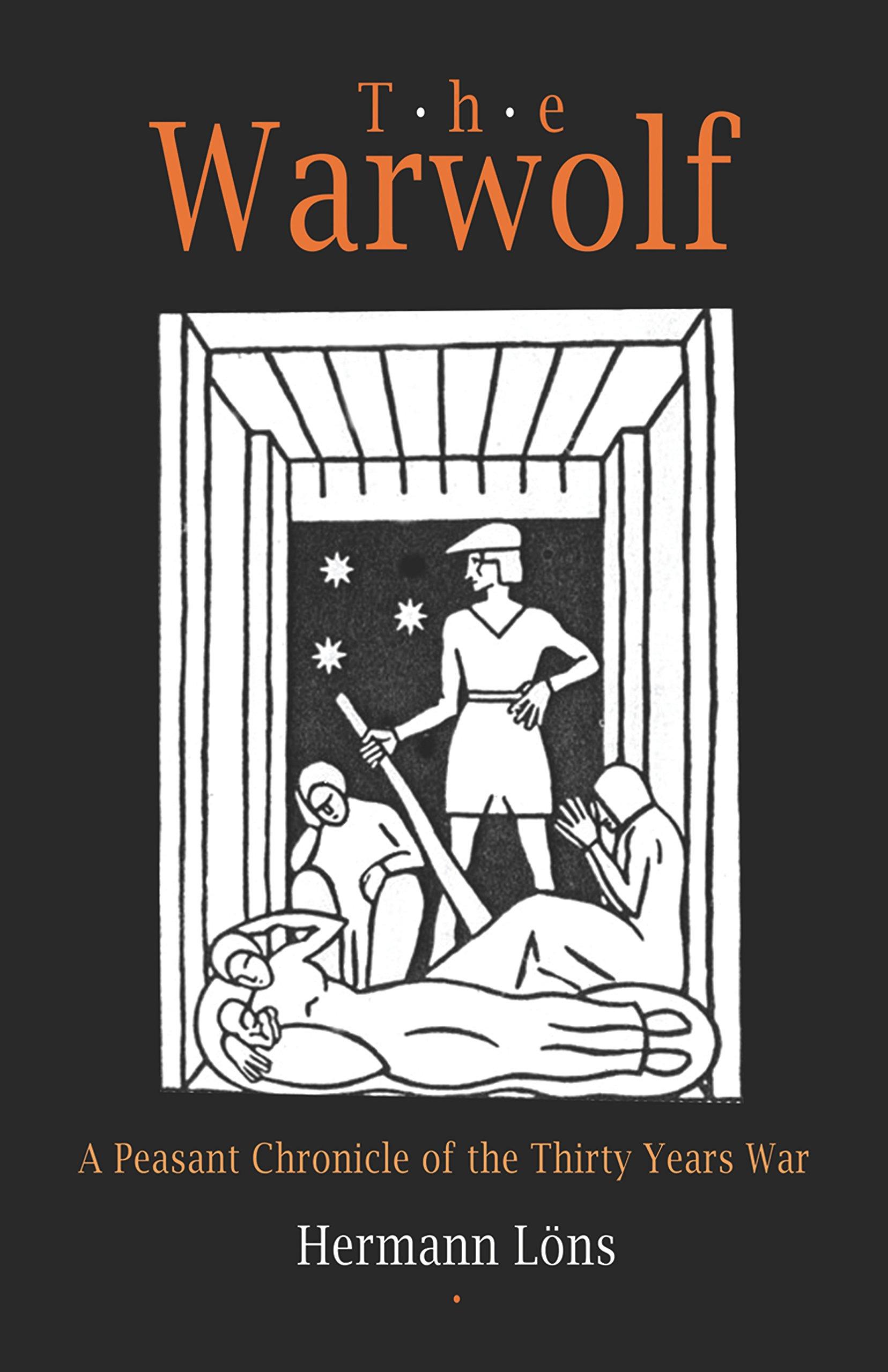
The German saying goes, “Hilft dir selbst, so hilft dir Gott”. If you help yourself, then God will help you. The book by Hermann Löns describes a violent German peasant guerilla outfit going after murderous soldiers during the 30 Years War (17th century).
Called the Warwulf in English, or Der Wehrwolf (the defender-wolf) in German, the novel focuses on protagonist Harm Wulf, a farmer whose blond ancestors came from further North and settled down in Lower Saxony, which is Northern Germany. Settled on a heathland in a carr (a forest with a swampy forest floor), the Wulfs produce a long lineage of heath farmers.
It’s a war between the Catholic forces of the Habsburg Empire, the Holy Roman Empire, and various other Protestant and Catholic forces, including those of France, Sweden, and Denmark. The point of the novel is that the small rural community Wulf belongs to becomes a lawless zone, forcing the farmers to make a stand for themselves.
As the war progresses, a sort of diversity encroaches upon the farmers’ dwellings: marauders, robbers, rapists all trample upon the land. And then the soldiers come. At first, Wulf is cooperative. He borrows officers his materials and horses, but is slapped in the face when asked for compensation. And then, early on in the novel, fate strikes. Harm Wulf’s family is murdered by soldiers fight in the war.
This is the turning point for a story of prolonged revenge. Wulf decides to become the leader of a local guerrilla outfit. Using the terrain, and remnants of an old fort, 111 or more guerillas begin taking out soldiers, killing them, drowning them, and hanging them, as revenge for the disruption caused by themselves.
The book’s themes are repeated verbatim throughout: “eye for an eye”, “those who draw our people’s blood must bleed themselves”, we kill the ones who have killed one of ours. And as guerrilla warriors, they live by this principle, not of the survival of the fittest, not of might is right, as we nowadays say in right-wing circles, but of the fact that only the most ruthless men will survive.
So, in a way, the story offers a great analogy with our own time. We are living in an age of diversity where a very diverse group of rapists, murderers, robbers and gangbangers are pushed upon us, shoved in our faces. The authorities don’t care. The media don’t believe us. So if we don’t make a stand for ourselves, we might as well be wiped out.
And the book, in fact, also condemns precisely those people we call “Normies” today, those people who just sit and wait for the war to be over, starving themselves while doing nothing. And that is wrong, the book says.
Harm and his guerillas spend the next 30 years spilling a lot of blood, but they survive, they make it to the end. Because in this situation, the authorities don’t help. The church won’t believe you. The armies don’t come to your rescue. You are left to your own devices.
And when you are like that, as the book describes, then you have every right to make a stand for yourself. You are your own last line of defense, and God permits it. Because if you help yourself, God will help you. The message is that people who behave proactively have the best chances at their survival. And sometimes violent reprisals are necessary to teach violent men a lesson.
„Not lehrt das Gebot, schlah doht, schlah doht!“
I also saw the book as incredibly relevant to our immediate future. Part of the reason we moved to a small community in a mountain valley.
The question in my mind regards the others around me. Few of whom seem capable of the violence necessary to preserve the community. How will people really respond to the end of affluence and comfort, the invasion by violent foreign predators? We will find out.
Ultimately, it is also such an effective story because it doesn’t sugarcoat the damage incurred by those who were forced to do unspeakable things in defense of their people. Harm is such a likable, easygoing man at the start. At the end, he has won but lost much of his humanity. We need to prepare ourselves for sacrificing what is tender in us for what is noble and righteous.